Episode 23: Getting Unstuck
Hope can grow… anywhere…
Thank you for listening to this unconventional episode. The more I’ve thought about it, and discussed it with others, it seems there “is” something worth exploring further in how a “positive target” can help shift mindsets from dullness (or vengeful action) to positive action.
Below you’ll find a few themes that are currently giving me hope. I’ll touch on the first of them in my upcoming episode on “Intuitive Neuroscience” and how long surviving / indigenous human cultures in Africa, Australia, the Americas, and other places seem to have found ways to balance their brains and not let the runaway tendencies of the left hemisphere overwhelm their ways of living – in ways that seem to serve mental wellness and cultural longevity. Very interesting.
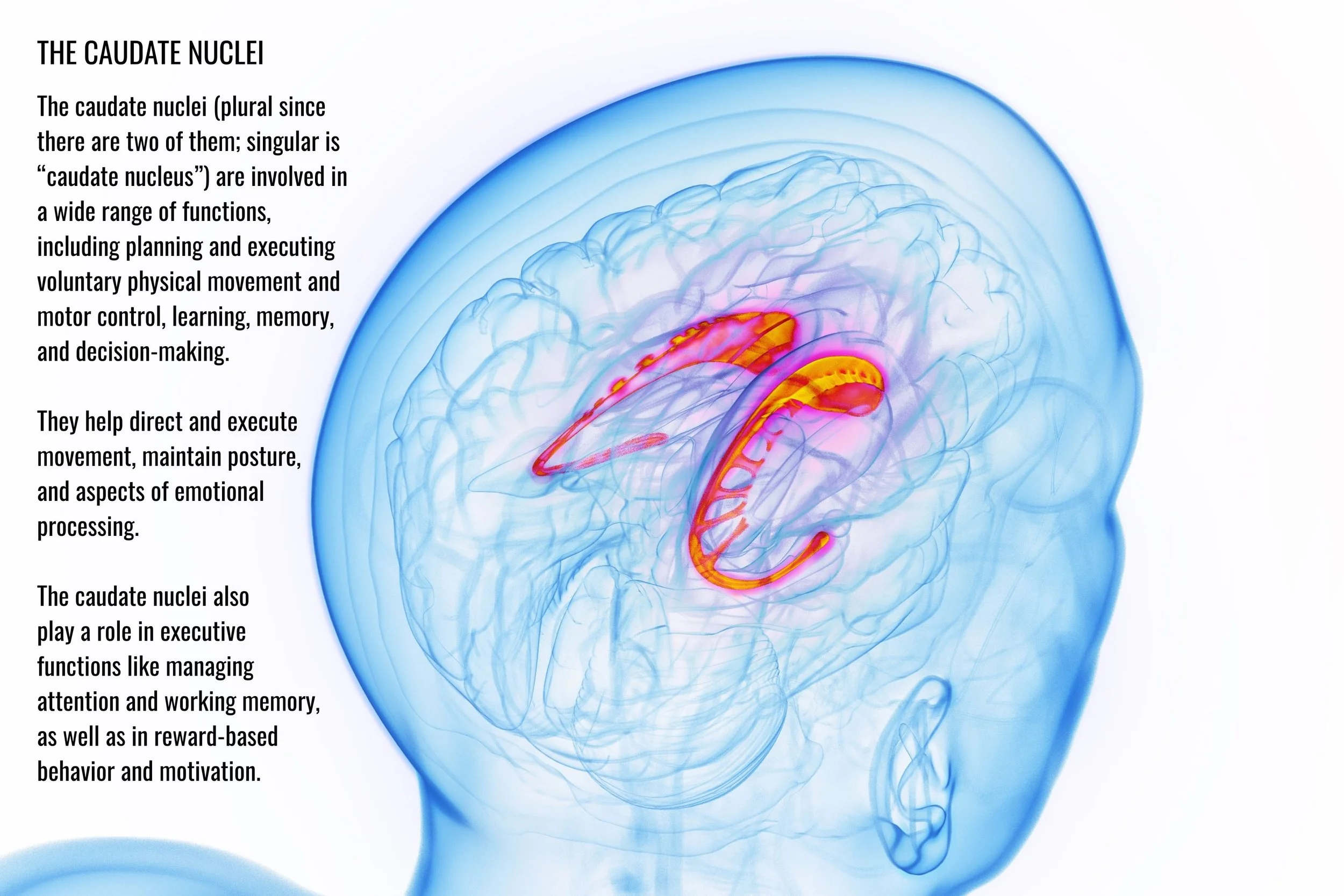
I touch on this theme in my February 2025 TEDx Talk, pasted below alongside a visualization of the Caudate Nuclei.
Six thoughts, truths, and people who give me hope:
Indigenous wisdom. Seeing the rise in attention to, acknowledgement of, reparations to, and learning from global Indigenous cultures – and very much from Native American traditions. When you hear the word “indigenous” shift your thoughts to “long surviving.” The Western world, what we often see as “civilization,” has been around for some 3,500 years. Yet every culture I know of that has survived intact for more than 5,000 years, and even as long as 100,000 years, practices some way of balancing the (often runaway) tendencies of the left hemisphere. Through ritual, ceremony, plant medicines, and even practices in daily life, something about taming excessive pursuit of gain and outcomes seems to guide survivable, sustainable ways of living. We have much to learn from those who uphold ancestral ways. To be explored in an upcoming episode!
Fungi. Learning about how our mycelial kin weave themselves in to all kinds of environments, to the nourishment and benefit of all. Not to mention the ever-growing litany of health aids, consciousness expanders, pollution mitigators, and environmental enrichers that stem from fungal life! So much to be learned from these unique life forms and all the ways they enrich our world.
The Telepathy Tapes. There’s a reason this podcast series spent months at the top of the “most listened to” list. It’s a mesmerizing dive into the communication between non-verbal autistic kids and their caregivers – and each other. That’s Season One, and it reaches well beyond our everyday notions of communication, and what the brain/mind might actually be capable of. Season Two looks at consciousness as a unifying and accessible field. I found Episode 3 (on Creativity) and Episode 4 (on Savants) to be truly mind-opening.
This quote by Ruth Bader Ginsberg: “Women belong in all places where decisions are being made.” It’s so simple, so succinct, and, for me, such a lens into how we’ve lost our way and why there is so much hardship in the world. Cultures out of balance are like brains out of balance. Ultimately they burn themselves out. More on this when I explore the female brain in a future episode…
Rising generations. Anecdotally, young people I’ve been meeting and interacting with blow my minds with their resilience and commitment to doing good / setting things right in the world. I notice an objectivity and a willingness to challenge the status quo that truly inspires me.
Skepticism about technical innovation as a fix-all “solution.” Again, anecdotal – yet during a recent visit to Silicon Valley I noted, for the first time ever, a general wariness about tech agendas and about the tradeoffs beneath the promises tech companies tend to make. There’s talk about the consequences, unintended and otherwise, of decisions tech companies make, and it’s happening at the ground level in ways I’ve never seen before. If you’d like to know more about the general “tech agenda,” writ large, I highly recommend the brilliant Adam Becker’s More Everything Forever, which explores the vision for the future rising from our best-known tech companies and the sources / forces that influence them. It’s eye-opening, and based on my experience (not to mention Adam’s fastidious research) harrowingly true.
That’s all for now. I’ll add more as inspiration lands! If you’d like to share what gives YOU hope, or make any suggestions for future episodes, drop me a message here.
Here’s a link to the book Heartbreak by Florence Williams, referenced in the episode. By the way, it’s available as an audiobook – recorded by the author in a lively, podcast-y style – here on Spotify.
A few articles exploring the relationship between the heart and the motivation systems in the brain: The Neurobiology of Love (Johns Hopkins), Love and the Brain (Havard Medical School),
This is Your Brain on Heartbreak by the Greater Good Center, and from Mayo Clinic, Exploring the Heart-Brain Connection. And here’s an overview from Heart Math Institute exploring communication between the brain and the heart.
Although this article feels more relevant to “procrastination” than to what I experienced as stuckness, it offers good insights into what’s going on in the brain – and maybe what to do about it.
Subscribe to The Brain and Beyond Podcast on your favorite platform. And stay tuned here, where I share episode notes and resources that explore the brain… and beyond.
Email me with suggestions for future guests and topics – or any questions about what’s shared here. I’ll do all I can to answer.
Best, Ellen
ellen@thebrainandbeyond.com